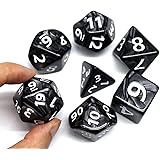
The exhilarating world of high-stakes craps comes alive in the accompanying video, showcasing a “God Run” filled with massive bets and incredible wins. Watching the action unfold at the craps table, with thousands of dollars riding on each roll of the dice, offers a unique glimpse into the fast-paced and often unpredictable nature of casino gambling. This session isn’t just about the thrill; it also highlights specific craps strategy and the mindset required for such significant wagers.
The video’s protagonist, accustomed to much higher overall stakes—having been down over $100,000 recently—approaches this particular session with a $50,000 bankroll, aiming to turn his luck around. He’s also playing for his cameraman, Grant, who is promised 5% of the winnings, adding an extra layer of motivation to the already intense atmosphere. This setup immediately communicates the seriousness of the play and the substantial amounts involved in high-stakes craps.
Understanding High-Stakes Craps Strategy at the Table
When playing craps at this level, every decision carries considerable weight. The video highlights a specific betting approach that differentiates itself from how many casual players engage with the game. For instance, the player explicitly states his preference for using the “come bet” with “max odds” rather than simply “placing the numbers.”
This strategy is rooted in a fundamental understanding of craps odds and house edge. Placing bets on numbers like 4 or 10, as mentioned in the video, typically carries a house edge of 6%. However, by making a come bet and then taking full odds, the player significantly reduces the effective house edge on his overall wager. The odds portion of a come bet (or pass line bet) is one of the only bets in the casino with zero house advantage, making it the most mathematically sound decision in craps.
The Power of Pass Line and Come Bets with Max Odds
At the heart of the player’s strategy are the Pass Line and Come bets, always backed up by the maximum allowable odds. A Pass Line bet is the foundational wager in craps, where you bet that the shooter will establish a point (4, 5, 6, 8, 9, or 10) and then hit that point again before rolling a 7. Once a point is established, taking odds behind your Pass Line bet allows you to place additional money with no house edge. This means the casino pays true odds on this portion of your bet, making it incredibly favorable.
Similarly, a Come bet functions much like a Pass Line bet, but it’s made after a point has already been established for the Pass Line. If a number rolls after you’ve made a Come bet, that bet “travels” to that number, becoming its own individual point. You can then take odds on this new Come bet, again benefiting from zero house advantage on the odds portion. This allows the player to cover multiple numbers on the table with highly advantageous odds, creating a “money printer” effect as multiple bets are working simultaneously.
In the video, the player takes 3X odds on the 10 and 4, and 4X odds on the 9 and 5. This aligns with common casino rules where odds multiples often vary based on the point number (e.g., 3-4-5X odds means 3X on 4 and 10, 4X on 5 and 9, and 5X on 6 and 8). By consistently backing his Pass Line and Come bets with max odds, the player demonstrates a sophisticated understanding of how to play craps with the best possible mathematical edge against the casino.
Riding the Craps Hot Streak: The “God Run” Phenomenon
The core of the video’s excitement comes from what the player dubs a “God Run” or a “hot roll.” This refers to an extended period where the dice seem to be favoring the shooter, hitting point after point and making profitable numbers appear with remarkable frequency. For any craps player, experiencing such a streak is the ultimate thrill, and the video perfectly captures this high-energy, almost euphoric state.
During the first significant “God Run,” the player managed to turn an initial $8,000 deficit into a staggering $55,000 profit on a single roll sequence. Starting the session with $50,000, he quickly found himself up to $115,000. This kind of rapid accumulation of winnings is a testament to the power of taking max odds and having multiple numbers working during a hot streak. Every hit on a number with full odds results in substantial payouts, often $7,000 per hit in this player’s case, quickly compounding profits.
The Psychology of High-Stakes Craps Gambling
The player’s commentary during these hot streaks reveals the intense psychology at play. He talks about feeling “amped” and “blood rushing,” describing a state where he believes “God’s been praying for me.” There’s also a touch of superstition, with the player switching from his usual left hand to his right hand, believing it brings a change of luck. This showcases how even seasoned, high-stakes gamblers can lean into subjective beliefs and emotional highs during a session, despite understanding the underlying mathematical probabilities.
However, the nature of craps means that every hot run eventually ends with a “7-out.” The video captures this reality too, as multiple profitable rolls conclude with the dreaded seven, wiping out all working bets. Losing $20,000 or $30,000 in an instant is a stark reminder of the game’s inherent volatility, even during the most successful sessions. The ability to absorb such losses and continue playing with a positive, confident attitude is crucial for high-stakes players, underscoring the importance of a robust bankroll.
Bankroll Management and the High-Stakes Player
The sheer scale of the bets and the fluctuating bankroll showcased in the video offer a vivid lesson in high-stakes bankroll management. Starting with $50,000 and having previously lost over $100,000, the player operates with a comfort level for risk that is far beyond the average gambler. This financial capacity is what allows him to withstand significant swings, such as an initial $8,000 loss or subsequent $20,000 and $30,000 losses on 7-outs, without being emotionally or financially crippled.
For most players interested in craps strategy, the key takeaway is to always gamble within your means. While the excitement of a “God Run” is undeniable, the mathematical reality of craps is that the casino always maintains a house edge on the base bets. Therefore, treating craps as a form of entertainment with a predefined budget, rather than a reliable source of income, is a more sustainable approach. A structured bankroll management plan, including setting win/loss limits, becomes even more critical when operating at lower stakes where financial resilience is not as great.
Craps as Entertainment vs. Professional Wagering
Crucially, the player makes an important distinction: “how I make my money, guys, is not at the craps table. This is a losing proposition. I’m doing this to give you guys a good show.” This statement is a candid and essential insight. Despite his strategic betting and incredible winning streaks, he acknowledges that craps, in the long term, is not a profitable venture due to the inherent house edge.
In contrast, he reveals that his true financial success comes from sports betting, where he claims to “print millions of dollars monthly” and has helped over 60,000 people make money. He also mentions a past as a top poker player with over $7 million in winnings. This highlights the difference between games of pure chance with a fixed house edge and forms of gambling where skill, information, and strategy can create a long-term advantage. While craps provides an unparalleled entertainment experience and a rush of adrenaline, it’s vital for players to understand its position in the broader spectrum of gambling activities.
Applying Lessons from a Craps “God Run”
The video provides an entertaining and educational look into high-stakes craps. It underscores the importance of understanding craps strategy, particularly the value of Pass Line and Come bets backed with maximum odds, which significantly reduce the house advantage. The emotional rollercoaster of a “God Run” and its inevitable conclusion offers a powerful lesson in managing expectations and bankroll.
While the player’s session was certainly a successful one, turning an initial $50,000 into a significant profit, his own words serve as the most crucial piece of craps strategy advice: enjoy the game for the thrill and the entertainment, but recognize its inherent nature as a losing proposition in the long run. Whether you’re playing for a couch or chasing a massive payout, an informed approach to betting and responsible bankroll management will enhance your craps game experience.
Did the Dice Gods Smile? Your Craps Run Q&A
What is a “God Run” in craps?
A “God Run,” also known as a “hot roll,” is an exciting period in craps where the dice consistently favor the shooter, hitting many points and profitable numbers. This can lead to significant winnings in a short amount of time.
What are Pass Line and Come bets in craps?
Pass Line and Come bets are foundational wagers in craps. A Pass Line bet is made before the first roll to establish a point, while a Come bet is similar but made after a point has already been established.
Why are “max odds” important when betting in craps?
Taking “max odds” on your Pass Line and Come bets is important because this specific wager has no house advantage. This means the casino pays true odds, significantly reducing the overall house edge on your bet and making it a mathematically sound strategy.
Can I make money playing craps in the long term?
The article suggests that craps is not a reliable way to make money in the long term, calling it a “losing proposition.” This is because the casino always maintains a house edge on the base bets, despite exciting short-term wins.